






Back Extensions vs. Back Raises
Back Extensions vs. Back Raises
Back Extensions vs. Back Raises
Most lifters use back extensions and back raises interchangeably in their strength training programs. They are the same exercise right? Back raises and back extensions get everyone confused – so everyone just simply uses the exercise names interchangeably. But this is incorrect. There is a difference.
I am going to show you that back extensions and back raises are two very different exercises that target different regions of the posterior chain. In fact, one of the exercises is more for the mid-to-upper back – not the hips!
Back Raises

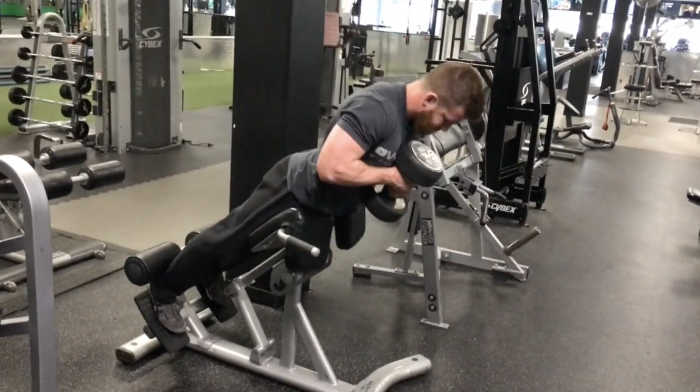
Back raises involve setting up in a 45-deg back extension, a Glute Ham Raises (GHR) bench or a Roman chair with the feet secure and the torso off the end. The hip extension can be overloaded with a variety of barbells, medicine balls, elastic bands, weights vests, chains and so on.
Target Musculature: glutes, hamstrings, adductor magnus, spinal erectors (isometrically)
Benefits: Strengthening hip extension, activating glutes and hamstrings and restabilizing lower back.
Back Extensions
This is where the article gets really cool. Back extensions are probably new to you. Don’t worry, most trainers and lifters have never seen them. There are many different ways to do them, but this is how we apply them.
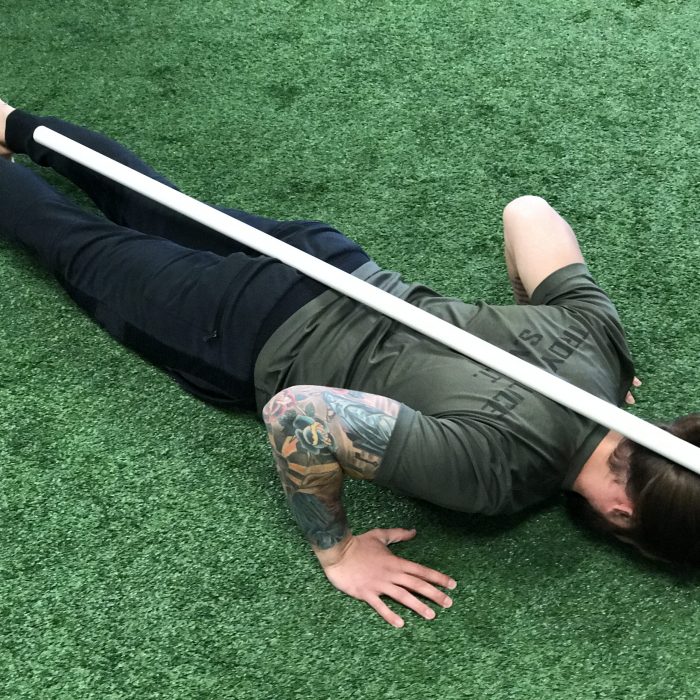
Setup with a wide stance (base) against a stationary object. We use the front pad of a GHR bench. The lower back should be fixed and in neutral. Loop a few elastic band around the foot plate of the GHR bench and place the other end over your back and under your arms. You are going to ease into a flexed position with your upper body only, do NOT move the hips or lower back. This can be accomplished by keeping the pad at a position above your waist. If it is too low, just widen your stance to drop down to a lower base.
A powerful extension is done against the resistance of the bands. The finish (locked position) should be held for a pause of 1-2 seconds.
Target Musculature: spinal erectors, traps, rhomboids
Benefits: Improve thoracic strength (extension and flexion) mobility, improve scapular strength and mobility (and overall shoulder health), and improve posture.

Volume
We use back extensions and back raises in our supplemental worksets. I like to hit both of these movements for lots and lots of reps. You can use them to bring up a weakness or to help rehab a back or hamstring injury. A good range would be:
3-5 sets x 10-20 reps
You could also overload the movement with a heavier weight, just follow a more typical strength training range.
3-5 sets x 8-12 reps
Quick Workout Examples
LOWER BODY WORKOUT
1) Squat, 4 sets x 8 reps
2A) Lunges, 3 sets x 8 reps each leg
2B) Back Raises, 3 sets x 12 reps
UPPER BODY WORKOUT
1) Bench Press, 3 sets x 12 reps
2A) DB Incline Bench, 4 sets x 10 reps
2B) Back Extensions, 4 sets x 12 reps
Here is a quick video showing you the difference between back extensions and back raises.



10X Your Workouts!
10X Your Workouts!
Revolutionize your warm-ups with the new innovative pre-training protection plans.
Used by professional athletes all over the world, these original routines will bulletproof your hips, low back, shoulders, ankles, knees, hamstrings, and more!