






WARNING – Worst Core Exercise – Do NOT Do This
WARNING – Worst Core Exercise – Do NOT Do This

Ah...can you say dreamy?
WARNING – One of the Worst Core Exercises
Do NOT Do This (with Safe Alternative)
I’m about to discuss two unspoken facts.
One, old school abdominal exercises might not be the best thing you could do for long-term health of your spine, and
B, a Taylor Laughtner comforter keeps me warm at night.
When you think about core training, many of the staples from back in the day usually included the decline bench. Now, I personally don’t have anything against sit-ups on a decline for healthy populations who have a thorough dynamic mobility plan built into their program. If it is comprehensive, this tells me that they are focusing on things like ankle, hip and t-spine mobility and strength mobility of the scapula. This also means they shouldn’t have any issues with too much attention to the hip flexors doing too many sit-ups variations because they are already addressing it in their warm-up.
Enter the Decline Plate Twists
Here is a great one I’m sure most of us have done. But there is a problem. Torso rotation with fixed hips and added weight will mess you up. This torque at the end range of t-spine rotation will create some serious issues on your discs.

You might get an injury when you do this OR issues might not show up for a long time. But every time you perform this exercise you are putting yourself at risk, putting undue stress on your spine and increasing your potential for injuries down the road.
Why take that chance? I’m not saying throw out all of the old movements, I’m saying choose the ones that target the quality we want and do so safely. There are also alternatives to most movements that work just as well.
A Safe Alternative
Anti-rotation movements target real core strength and stability. They improve your ability, under load, to remain stable and prevent movement. For speed-strength or unloaded movements, they aid in improving your ability to accumulate and transfer power.
“Trunk flexion is any movement where the upper part of the trunk moves toward the waistline. The prime mover in flexion exercises is the rectus abdominus (RA). The external and internal obliques are also active, contracting bilaterally to synergistically aid and guide the movement.” – (Robertson, 21st Century Core Training)
The important distinction with rotational movements can be found at the hips. Typically, many old school exercises that strengthen torso rotation, lock the hips in place. This creates big time shear on the spine! When in reality, rotational movements should be coordinated through a full kinetic sequencing. This means the hips should follow the shoulders to create the power for rotational movements — generating power from the ground up and from the core out.
Anti-Rotation Decline Sit-ups
Here is a good variation you can do, in addition to your rotational closed chain ballistic movements. Do not allow the hands to move off of midline during the movement. Brace the torso and remain tight and focused. Heavier bands can be used to blow the intensity out of the water. This is a serious exercise.








10X Your Workouts!
10X Your Workouts!
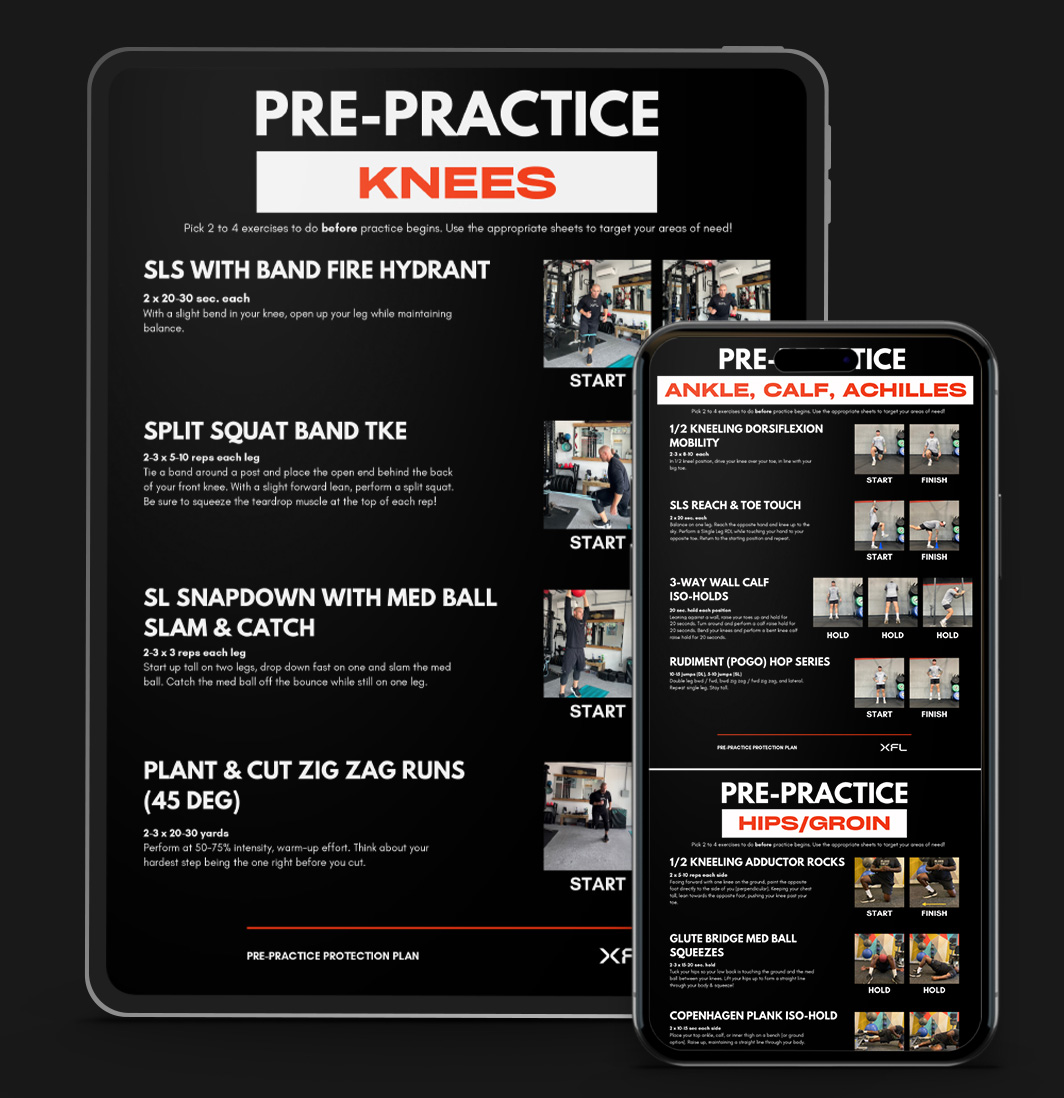
Revolutionize your warm-ups with the new innovative pre-training protection plans.
Used by professional athletes all over the world, these original routines will bulletproof your hips, low back, shoulders, ankles, knees, hamstrings, and more!