







Instability Drives Stability
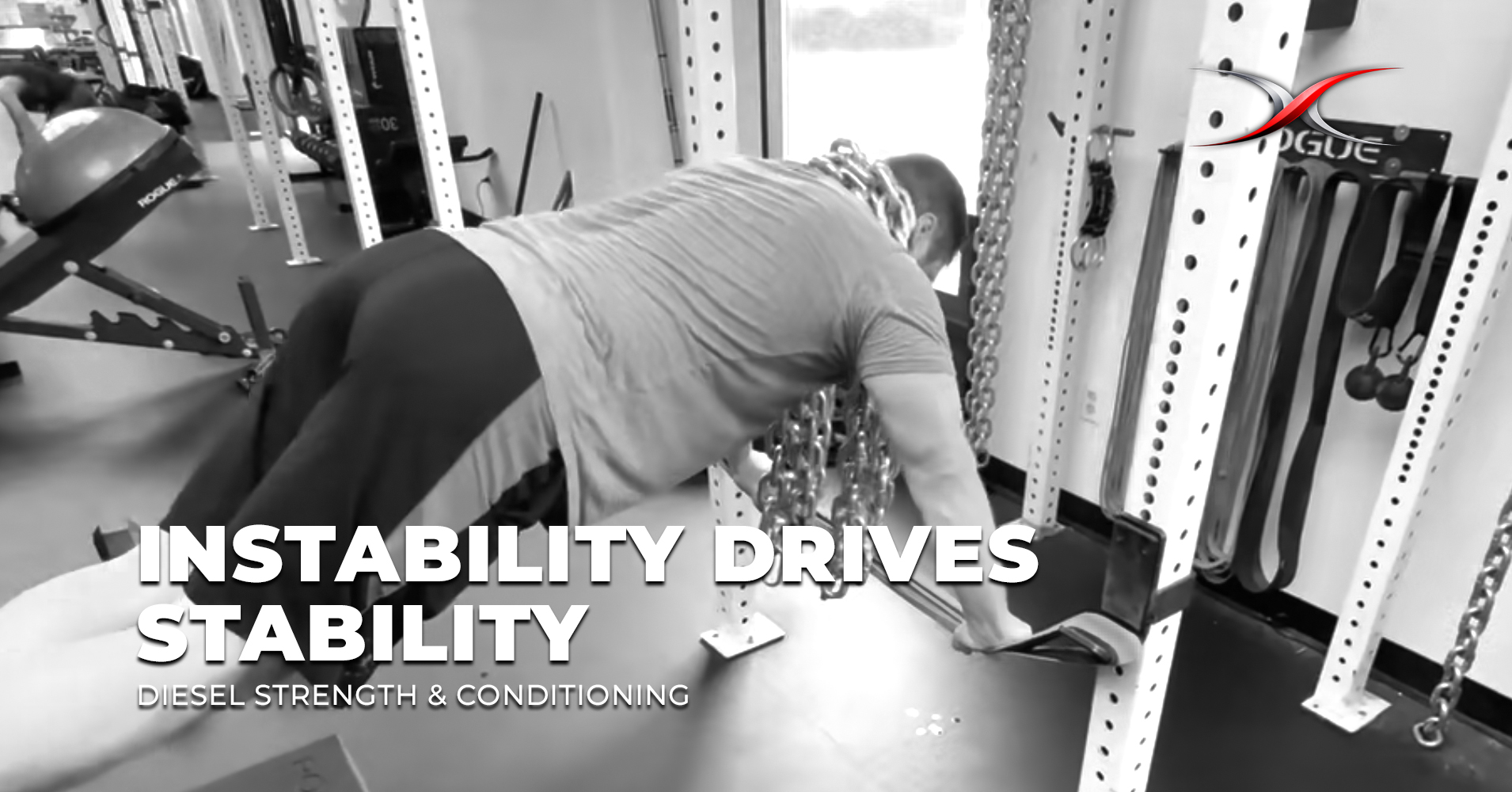
Instability Drives Stability
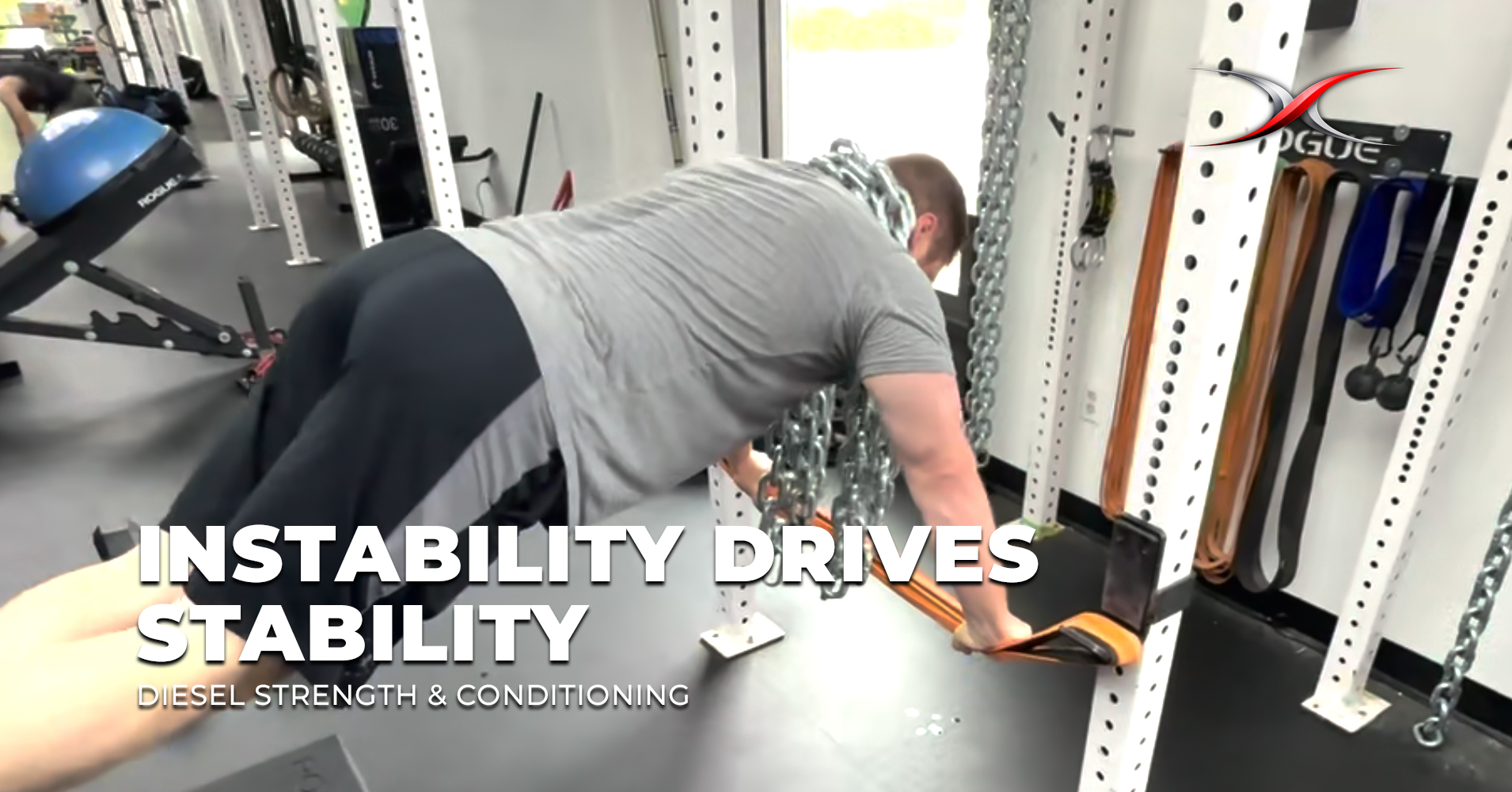
Instability drives stability.
That was the central thesis I wrote about in 2002 while developing the Chaos Manual. At the time, the Chaos Manual was unlike anything else available. It captured everything I was experimenting with in the weight room as a young strength coach and challenged many of the traditional assumptions about how athletes should train.
By the time it was finished, the manual had grown to nearly 500 pages and included a massive exercise library demonstrating how to integrate instability—or more accurately, vibration, agitation, and oscillation—into conventional strength training. The goal wasn’t to make exercises harder for the sake of making them harder. It was to create a progression that bridged the gap between General Physical Preparation (GPP) and Sport-Specific Physical Preparation (SPP), teaching athletes to stabilize, react, and produce force under less-than-perfect conditions.
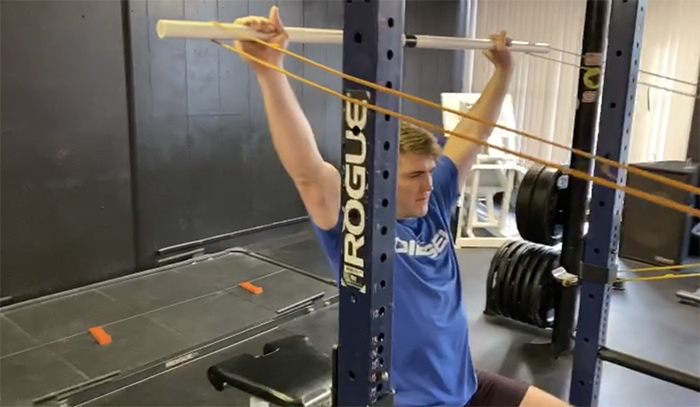
More than two decades later, the principles introduced in the Chaos Manual continue to influence the strength and conditioning profession. Chaos push-ups, oscillating repetitions, hanging-band training, and countless other variations have found their way into gyms, clinics, certification courses, and training programs around the world. What began as an experiment eventually became a training philosophy that changed how thousands of coaches think about stability, force production, and athletic performance.
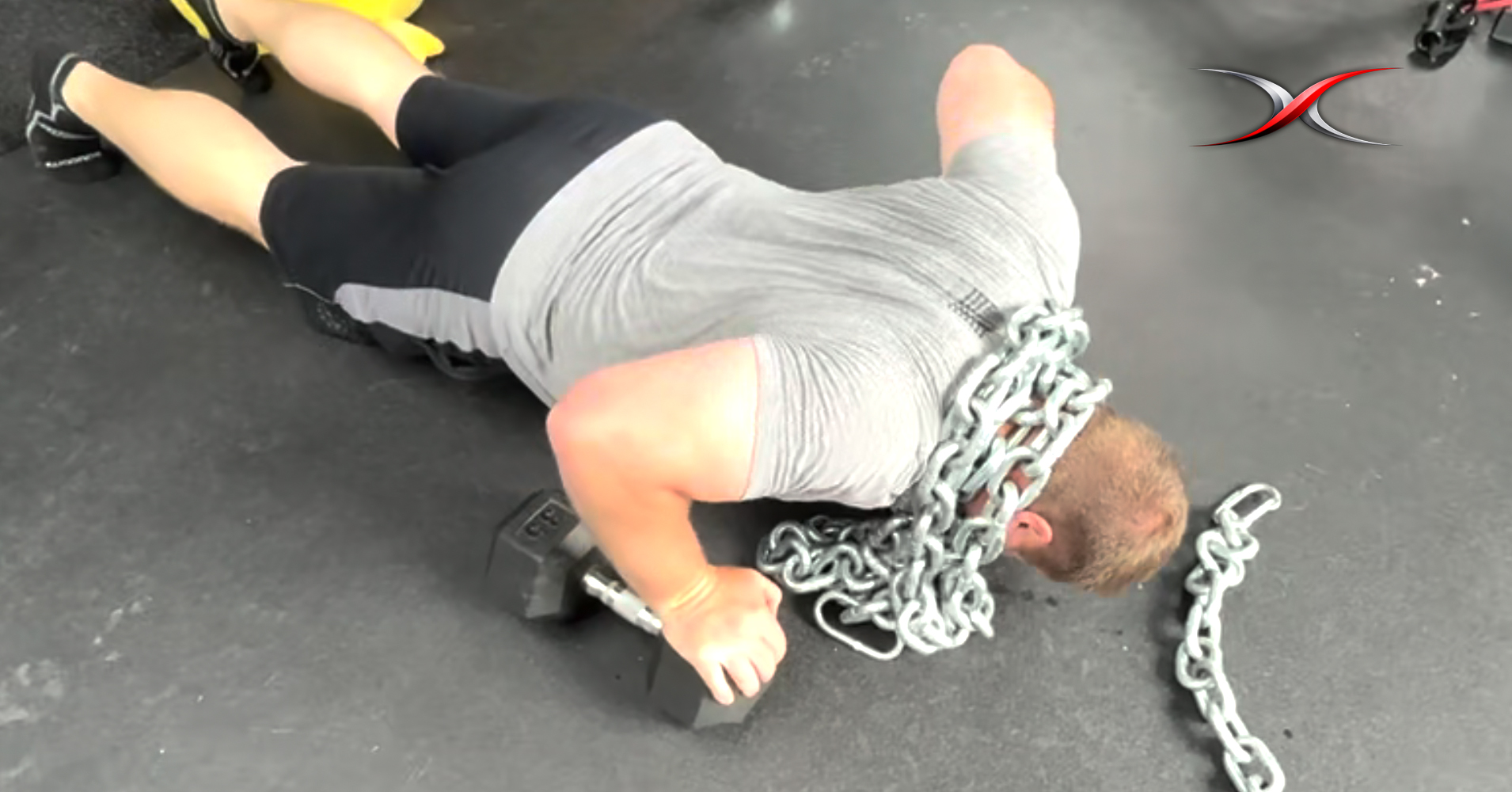
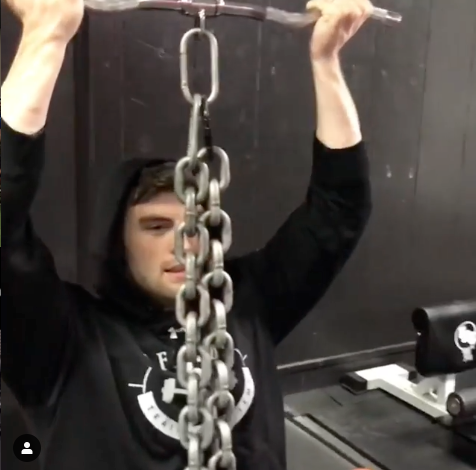
I wanted to share with you a workout we did before jiu jitsu this week that only took 25 minutes because it included chaos push-ups.
1A) Chaos Push-ups, 5 sets x 5 reps with 1, 2, 3, 4, 5 chain(s), no rest
1B) Push-ups on Dumbbells, 5 sets x 5 reps with 1, 2, 3, 4, 5 chain(s), no rest
1C) Band-Resisted Pec Flys, 4 sets x 20 reps, 1 set x 100 reps
* Every round we added a chain
For the first round, we used 1 chain and we added 1 chain every round. This means that the last round looked like this:
1A) Chaos Push-ups, 1 set x 5 reps with 5 chains, no rest
1B) Push-ups on Dumbbells, 1 set x 5 reps with 5 chains, no rest
1C) Band-Resisted Pec Flys, 1 set x 100 reps
I wasn’t able to perform all 5 reps for 1A) and 1B), so I did rest pause – resting 10-15 sec. between each attempt until I hit 5 total reps. I also broke up the last set of band-resisted pec flys into 4 sets x 25 reps.
As I’ve stated many times previously, even without heavy barbell work, a chest training session using bodyweight movements is still incredibly effective for building muscle. That’s where the principle that instability drives stability comes into play. Controlled perturbations force your body to solve a constant stream of movement problems, teaching the shoulders, scapulae, and core to stabilize reflexively. When you return to the bench press, you have a greater capacity to resist unwanted movement, create a tighter setup, improve force transfer into the bar, and ultimately refine your pressing technique.
If you enjoy unique training methods like chaos training and want to continue building muscle, strength, and athleticism without beating up your joints, check out Ageless Athlete 5.0. This comprehensive 12-week training system is built around intelligent exercise selection, joint-friendly programming, and proven methods that help you stay strong, resilient, and training at a high level for years to come. Learn more about Ageless Athlete 5.0 here.


10X Your Workouts!
10X Your Workouts!
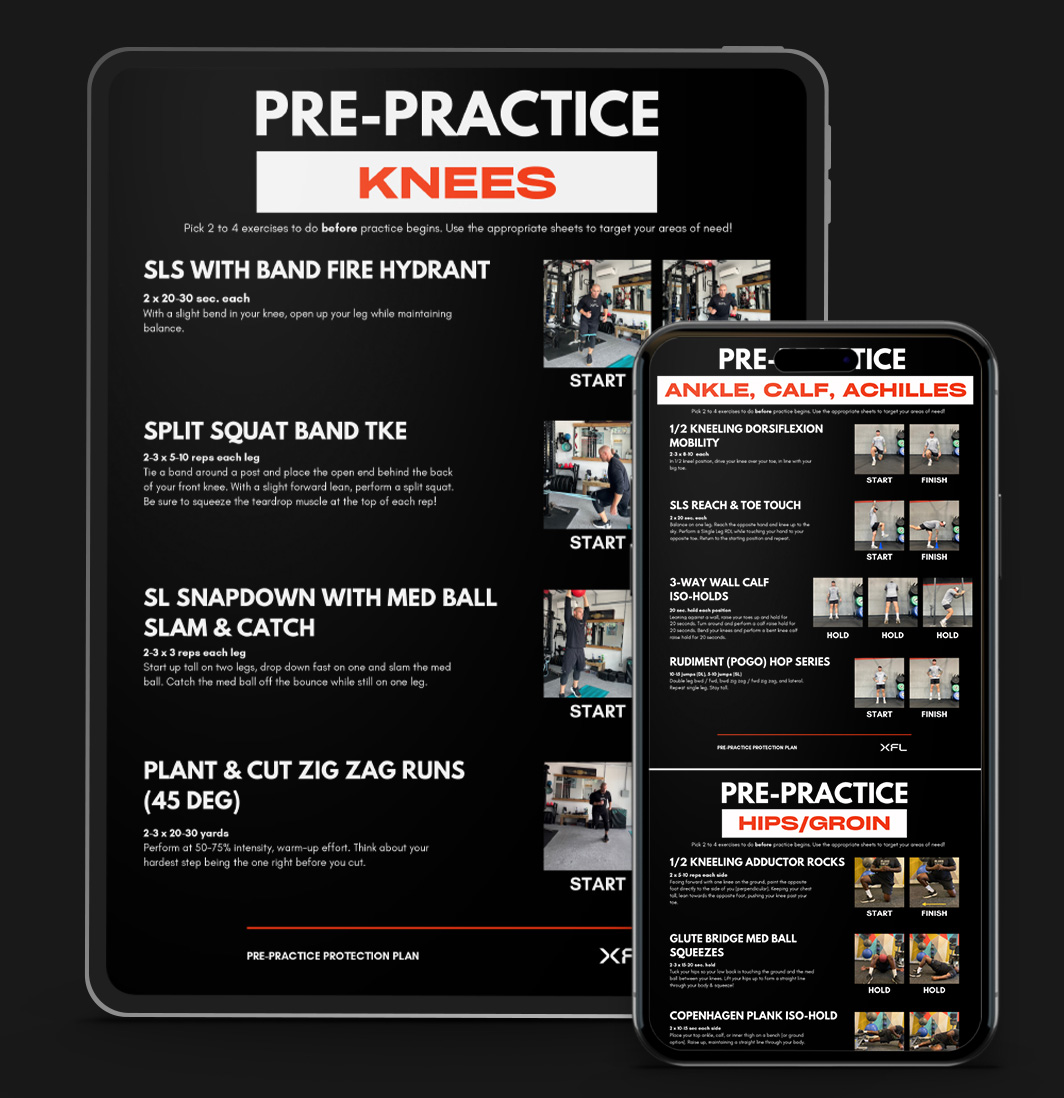
Revolutionize your warm-ups with the new innovative pre-training protection plans.
Used by professional athletes all over the world, these original routines will bulletproof your hips, low back, shoulders, ankles, knees, hamstrings, and more!